Overcome Marketing Fragmentation to Break Through E-commerce Revenue Plateaus
Running a successful e-commerce business often feels less like being a CEO and more like being a professional firefighter. You start your day intending to focus on product development or customer experience, but within minutes, you are pulled into the operational weeds. A landing page is broken, your ad spend is spiraling without conversions, the copywriter is late with the email draft, and you are still waiting on a video editor to return the creative assets for a campaign that was supposed to launch yesterday. This fragmentation is the silent killer of growth for online retailers. The energy you should be pouring into strategic expansion is instead drained by the sheer logistical weight of managing multiple marketing channels and the vendors required to run them.
The traditional approach to scaling an online store is built on a model that is rapidly becoming obsolete. Historically, growth meant hiring a specialized agency or assembling a roster of freelancers—one for graphics, one for copy, one for media buying, and perhaps another for web development. While this creates a sense of activity, it often results in a disjointed strategy where the pieces do not fit together perfectly. The copywriter doesn't speak to the data analyst, and the media buyer isn't aligned with the brand storyteller. You become the bottleneck, the middleman passing notes between expensive contractors while paying a premium for the privilege. For the time-strapped business owner, this is not a sustainable path to scalability; it is a recipe for burnout and diminishing returns.
The Financial and Operational Drain of Fragmented Marketing
To understand why a shift is necessary, you must first audit the true cost of the current manual or agency-dependent model. It is not just about the monthly retainers or hourly rates, though those are significant. The deeper cost lies in the latency of decision-making and the lack of cohesion. In a fast-paced digital environment, consumer trends shift in hours, not weeks. If your agency requires five business days to pivot a campaign creative based on new data, you have already lost the window of opportunity. Furthermore, when you rely on human coordination across different time zones and disciplines, you introduce friction. Every handoff between a writer and a designer is a potential point of failure or delay.
For many e-commerce owners, the solution has been to try and do it all themselves. You learn the basics of Facebook Ads Manager, you tinker with landing page builders, and you write your own product descriptions late at night. While this saves on agency fees, it incurs a massive opportunity cost. Every hour you spend tweaking ad sets is an hour you are not sourcing better products, negotiating with suppliers, or improving your customer service protocols. This "hustle" mindset, while admirable, eventually hits a ceiling. You cannot outwork the complexity of a global digital market. To break through the revenue plateau, you need a system that decouples your marketing output from your personal time input.
Consolidating Strategy with Artificial Intelligence
The paradigm shift that is currently reshaping the industry is the move toward unified, automated intelligence. We are transitioning from an era of "managed services" to an era of "managed outcomes" driven by technology. Advanced algorithms are no longer just tools for analyzing data; they are now capable of executing the creative and strategic work that used to require a team of five. This is where the concept of the AI-driven marketing engine comes into play. By centralizing research, content creation, and campaign execution into a single intelligent system, business owners can bypass the inefficiencies of human coordination entirely.
Imagine a scenario where the research phase—typically a week-long process of analyzing competitor ads, identifying audience pain points, and finding trending keywords—happens in minutes. An intelligent system can scan the digital landscape, digest millions of data points, and determine exactly what angle will resonate with your target demographic. This isn't just about speed; it is about precision. Human intuition is powerful, but it is biased and limited by what we have personally seen. AI operates on a dataset far larger than any human expert could absorb in a lifetime, ensuring that your marketing strategy is based on empirical reality rather than guesswork.
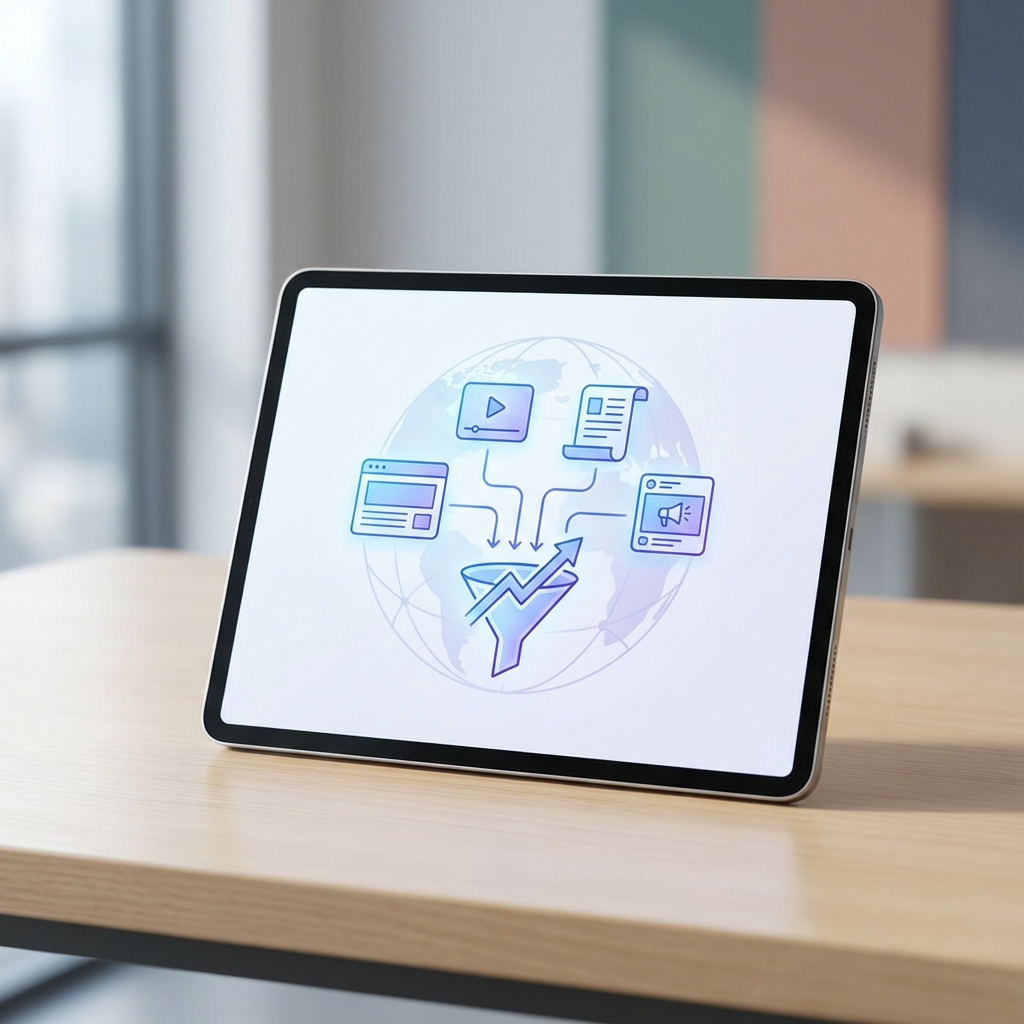
This is where PowerAds AI becomes an indispensable asset for the modern e-commerce entrepreneur. Unlike disjointed tools that only handle one piece of the puzzle, PowerAds AI functions as a comprehensive marketing ecosystem. It doesn't just write copy or just track clicks; it builds the entire funnel from the ground up. It conducts the deep-dive research, generates high-converting landing pages, produces video content, writes articles, and launches the ads across major platforms like Google, Facebook, and Instagram. By automating the entire chain of command, it eliminates the need for a fragmented team of freelancers. You are no longer paying for the time it takes to create a campaign; you are investing in a system that delivers the campaign instantly, optimized by data that is refreshed in real-time.
The Competitive Advantage of Speed and Autonomy
Speed is the new currency in e-commerce. The ability to test a new product angle, launch a seasonal promotion, or capitalize on a viral trend instantly is what separates market leaders from the rest of the pack. When you rely on traditional workflows, your speed is capped by human bandwidth. When you leverage a platform like PowerAds AI, your speed is virtually unlimited. You can generate multiple variations of a landing page to test different value propositions simultaneously. You can produce dozens of video ads to see which visual style grabs attention. This volume of testing would be cost-prohibitive with a human agency, but with AI, it is standard operating procedure.
Furthermore, the autonomy provided by this technology allows you to reclaim your role as the visionary of your business. Instead of managing people, you are managing a system that works 24/7. While you sleep, the AI is monitoring your ad spend, cutting budget to underperforming assets, and scaling up the winners. It brings a level of mathematical discipline to your marketing that is hard for humans to maintain emotionally. We often get attached to a specific ad creative because we "like" it, even if the data says it's failing. An AI has no such bias; it ruthlessly optimizes for the metrics that matter—leads, sales, and return on investment. This shift allows you to step back and look at the big picture, confident that the execution is being handled with maximum accuracy.
- Audit your current time expenditure to identify bottlenecks. specific tasks like writing ad copy, adjusting bids, or briefing designers are consuming more than five hours of your week, these are prime candidates for automation. Calculate the hourly cost of your time versus the cost of a software solution.
- Consolidate your marketing stack into a unified platform. Instead of paying for a landing page builder, a video editor, a copywriting assistant, and an analytics tool separately, look for an all-in-one solution. This reduces subscription bloat and ensures data flows seamlessly between the landing page and the ad platform.
- Shift your focus from campaign execution to product strategy. Once the marketing heavy lifting is offloaded to a system like PowerAds AI, use that recovered time to improve your supply chain, enhance customer support, or develop new product lines. These are high-leverage activities that AI cannot yet replicate.
- Trust the data over your intuition. When transitioning to an automated system, allow the algorithms to run their course. The AI needs to gather data to learn and optimize. Resist the urge to manually intervene too early, and judge the success based on hard KPIs like cost-per-acquisition and return on ad spend.
The trajectory of e-commerce is clear: those who embrace automation will operate with leaner overheads and faster reaction times, while those who cling to manual processes will struggle to keep up with the pace of change. The technology now exists to replace the expensive, slow, and error-prone structures of the past with a streamlined, intelligent engine. By adopting a solution that handles everything from strategy to execution, you are not just buying software; you are buying back your freedom. You are securing the ability to grow your business without growing your stress levels.
Ultimately, the goal of any business owner is to build an asset that serves them, rather than a job that enslaves them. Marketing has long been the most demanding aspect of running an online store, but it doesn't have to be. With the right tools, you can turn your marketing into a self-driving machine that generates leads and sales around the clock. This allows you to return to the work that truly matters—building a brand that lasts.
Discover how to fully automate your marketing strategy and reclaim your time today.